
The Prophet’s seerah guides Muslims today
“We cannot understand Islam without understanding the seerah.”
The seerah and sunnah of Prophet Muhammad are a timeless guide for Muslims facing Islamophobia and despair, and studying and sharing them through interfaith common ground can renew faith and correct misunderstandings about Islam.
The khutbah in 6 steps
- Opens with Gaza, negative news, Islamophobia, and hopelessness, presenting the Prophet’s seerah as guidance.
- Explains why the seerah is timeless and essential for understanding the Qur’an and Islam.
- Connects following the Prophet with earning Allah’s love, forgiveness, and guidance.
- Calls for sharing Islam through interfaith dialogue, shared monotheism, and cooperation.
- Uses examples from Abyssinia, Medina, and Jerusalem to illustrate religious freedom and protection.
- Closes by urging seerah study and outreach, followed by prayers for Gaza and renewed commitment to the sunnah.
In the khateeb's words
“So the seerah, the Qur'an is the text and the seerah is its context.”
“And then we cannot understand Islam without understanding the seerah.”
“we have to emphasize what is common among them, not something that divides us.”
For the dinner table
The khateeb reminded us that difficult news can make us feel hopeless, but the life and example of Prophet Muhammad offer a lasting guide. He explained that the seerah helps us understand the Qur'an and practice Islam, so loving the Prophet should lead us to learn about his life. He encouraged Muslims to explain Islam to neighbors and coworkers by beginning with shared belief in one God and working together where possible. Stories from Abyssinia, Medina, and Jerusalem were presented as examples of protecting religious freedom and honoring other communities. The khutbah ended by urging us to study and share the seerah, pray for the oppressed, and reconnect our actions to the Prophet's sunnah.
- What is one story from the Prophet's life you would like to learn more about?
- How can our family find common ground with neighbors of another faith?
- What is one way we can share something true and kind about Islam this week?
More on the Prophets & seerah
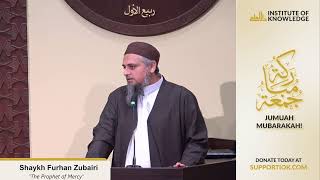 IOK · Diamond Bar, CA · Sep 19, 2026Learn the Prophet's life to love him“Love is something that grows through knowledge.”
Be mindful of Allah, and He will protect you.9:56Al-Sabereen · Harrisburg, PA · Oct 24, 2026Defend the Prophet by living his example
No one can walk for you.5:06MCC San Diego · Rancho Bernardo, CA · Oct 3, 2026Prophetic mercy meets people where they are