
Use wealth humbly before it fades
“The lesson for us is not to abandon wealth.”
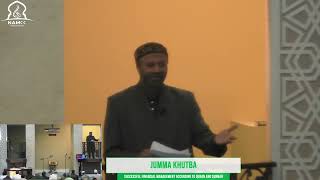
Through the Quranic parable of the two gardens in Surah al-Kahf, the khutbah argues that all wealth, power, and connections are temporary gifts from Allah, and that true faith is shown by gratitude, humility, and using blessings for charity rather than boasting.
The khutbah in 8 steps
- Opening on the virtue of praying isha and fajr in congregation, and a Westboro masjid restricting board membership to fajr/isha attendees
- The meanings of kufr: disbelief, rejecting known truth, and ingratitude
- Setting the scene of the two-gardens parable: the newly rich man showing off to his poor companion
- The rich man's three false ideologies: permanence of wealth, denial of the hereafter, and assumed divine approval
- The companion's gentle rebuttal: reminder of humble origins and the worldview of 'mashallah la quwwata illa billah'
- The garden's destruction and the rich man's regret
- Conclusion: all authority and permanence belong to Allah alone; followers and wealth vanish (Musharraf example)
- Practical close: establish a charity trust, even one dollar a day, and teach children by example
In the khateeb's words
“that only people who come to the masjid for fajr and isha can be on the board obviously that excludes a lot of people and it makes a lot of people unhappy as well”
“most of the people sitting in this audience here are in the top 5% of the world in terms of their health wealth mental capacities job security”
“we have to understand that the power actually belongs to Allah subhanahu wa ta'ala I am speaking here but the ability to speak has been given to me by Allah subhanahu wa ta'ala”
“the lesson for us is not to abandon wealth it's just that don't allow it to settle in your heart”
For the dinner table
In today's khutbah, Dr. Saleem Khanani reflected on Surah Kahf's story of two friends, one wealthy and boastful, the other poor but faithful. He reminded us that every blessing, from wealth to health to family, comes from Allah alone, and that forgetting this is a kind of injustice we do to ourselves. The khateeb encouraged us to say 'mashallah la quwwata illa billah' when we see good things, teaching our children by example to recognize Allah's power. He also warned against three common traps: thinking success lasts forever, denying the hereafter, and assuming faith alone guarantees ease without accountability. Finally, he shared how he set up a charity trust so his wealth would outlive him in good deeds, urging us to keep money in our hands but not let it settle in our hearts.
- What is one thing you have that you sometimes forget came from Allah?
- How can saying 'mashallah' help us remember that Allah gives us everything?
- If you had extra money, what is one good cause you would want to support?
More on Wealth & charity
 15:41NAMCC · North Austin, TX · Oct 24, 2026Earn halal, spend wisely, and save“May Allah have mercy on a man who earns his money in a halal way, spends it economically, and saves some of it for a day that he needs it.”

Don't think that taking the easy way out or the shortcut is actually going to make you gain the rizq quicker.25:16MAPS Redmond · Redmond, WA · Sep 18, 2026Trust Allah's provision and find contentment

Everyone wants more Rizq, but no one wants accountability and responsibility, and you cannot have one without the other.19:34Qalam · Carrollton, TX · Sep 11, 2026More provision means more accountability