
The Prophet's mercy should shape us
“The more you are connected with Allah, the more mercy you will receive in your heart.”
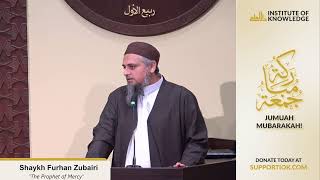
The Prophet Muhammad's defining quality is mercy, and cultivating love for him through learning his character should lead Muslims to embody mercy, forgiveness, consultation, and continued moral growth.
The khutbah in 6 steps
- Introduces Rabi' al-Awwal, differing views on the Prophet's birth date, and gratitude rather than formal mourning.
- Defends studying the Prophet's seerah and shamail, explaining that sin diminishes but does not erase love.
- Uses the Kaaba's rebuilding history to argue that permissible actions may be left undone because of harmful consequences.
- Identifies rahmah, or mercy, as the defining quality of the Prophet's mission and connects it to Allah's mercy.
- Uses the aftermath of Uhud to show mercy through forgiveness, prayer, consultation, and trust in Allah.
- Concludes with prayers for oppressed communities and for love and faithful following of the Prophet.
In the khateeb's words
“Because sin does not contradict love. Sin diminishes the perfection of love.”
“the more you are connected with Allah, the more mercy you will receive in your heart.”
“yes there are mistakes but this is time when you exemplify your mercy they did mistakes you need to correct them with mercy”
For the dinner table
Rabi' al-Awwal is a time to remember the Prophet Muhammad with gratitude and to learn his life and qualities. The khutbah explained that even when a person sins, love for the Prophet can remain, though it needs to grow into better following. The Prophet's defining quality is mercy, which comes from closeness to Allah and should shape how we treat people, especially when they make mistakes. After Uhud, he modeled mercy by forgiving, asking forgiveness for his companions, continuing to consult them, and trusting Allah.
- What is one merciful response you could practice when someone in our family makes a mistake?
- How can learning about the Prophet's character change the way we treat others?
- Why might a good leader keep consulting people after a decision goes badly?
More on the Prophets & seerah
 IOK · Diamond Bar, CA · Sep 19, 2026Learn the Prophet's life to love him“Love is something that grows through knowledge.”

Be mindful of Allah, and He will protect you.9:56Al-Sabereen · Harrisburg, PA · Oct 24, 2026Defend the Prophet by living his example

No one can walk for you.5:06MCC San Diego · Rancho Bernardo, CA · Oct 3, 2026Prophetic mercy meets people where they are