Three accounts · one night

Gethsemane in Mark, Matthew & Luke

Three writers tell the night of Jesus's arrest (Mark, Matthew, and Luke), and they do not tell it identically. Read without the two disputed verses of Luke 22, they yield two sharply different portraits of the same night. All three accounts are here in full (World English Bible, public domain), with the principal differences and the manuscript history of Luke 22:43-44.

The three accounts

Mark

Mark 14:32-42

32They came to a place which was named Gethsemane. He said to his disciples, “Sit here while I pray.” 33He took with him Peter, James, and John, and began to be greatly troubled and distressed. 34He said to them, “My soul is exceedingly sorrowful, even to death. Stay here and watch.” 35He went forward a little, and fell on the ground, and prayed that if it were possible, the hour might pass away from him. 36He said, “Abba, Father, all things are possible to you. Please remove this cup from me. However, not what I desire, but what you desire.” 37He came and found them sleeping, and said to Peter, “Simon, are you sleeping? Couldn’t you watch one hour? 38Watch and pray, that you may not enter into temptation. The spirit indeed is willing, but the flesh is weak.” 39Again he went away and prayed, saying the same words. 40Again he returned and found them sleeping, for their eyes were very heavy; and they didn’t know what to answer him. 41He came the third time and said to them, “Sleep on now, and take your rest. It is enough. The hour has come. Behold, the Son of Man is betrayed into the hands of sinners. 42Arise! Let’s get going. Behold, he who betrays me is at hand.”

World English Bible (public domain) · source ↗

Matthew

Matthew 26:36-46

36Then Jesus came with them to a place called Gethsemane, and said to his disciples, “Sit here, while I go there and pray.” 37He took with him Peter and the two sons of Zebedee, and began to be sorrowful and severely troubled. 38Then Jesus said to them, “My soul is exceedingly sorrowful, even to death. Stay here and watch with me.” 39He went forward a little, fell on his face, and prayed, saying, “My Father, if it is possible, let this cup pass away from me; nevertheless, not what I desire, but what you desire.” 40He came to the disciples and found them sleeping, and said to Peter, “What, couldn’t you watch with me for one hour? 41Watch and pray, that you don’t enter into temptation. The spirit indeed is willing, but the flesh is weak.” 42Again, a second time he went away and prayed, saying, “My Father, if this cup can’t pass away from me unless I drink it, your desire be done.” 43He came again and found them sleeping, for their eyes were heavy. 44He left them again, went away, and prayed a third time, saying the same words. 45Then he came to his disciples and said to them, “Are you still sleeping and resting? Behold, the hour is at hand, and the Son of Man is betrayed into the hands of sinners. 46Arise, let’s be going. Behold, he who betrays me is at hand.”

World English Bible (public domain) · source ↗

Luke

Luke 22:39-46

39He came out and went, as his custom was, to the Mount of Olives. His disciples also followed him. 40When he was at the place, he said to them, “Pray that you don’t enter into temptation.” 41He was withdrawn from them about a stone’s throw, and he knelt down and prayed, 42saying, “Father, if you are willing, remove this cup from me. Nevertheless, not my will, but yours, be done.” 43An angel from heaven appeared to him, strengthening him. 44Being in agony, he prayed more earnestly. His sweat became like great drops of blood falling down on the ground. 45When he rose up from his prayer, he came to the disciples and found them sleeping because of grief, 46and said to them, “Why do you sleep? Rise and pray that you may not enter into temptation.”

World English Bible (public domain) · source ↗
What differs, exactly

Across the three accounts:

  • The address differs: Mark has “Abba, Father” (the only Gospel to preserve the Aramaic), Matthew has “My Father,” Luke simply “Father.”
  • The posture differs: Mark, “fell on the ground”; Matthew, “fell on his face”; Luke, “he knelt down.”
  • Mark and Matthew record three returns to the sleeping disciples; Luke records one.
  • Luke alone does not name Gethsemane (he writes “the Mount of Olives, as his custom was”), and only Luke has the strengthening angel and the sweat “like great drops of blood” (on those two verses, see the manuscript note below).
  • The saying “My soul is exceedingly sorrowful, even to death” appears in Mark and Matthew but has no parallel in Luke.
  • All three agree on the substance of the prayer: that the cup pass, and that the Father's will, not his own, be done.

Not all of these are differences of detail. Set the columns side by side and two portraits emerge: Mark and Matthew show a Jesus “greatly troubled and distressed,” sorrowful “even to death,” falling to the ground, returning three times; Luke shows a composed Jesus who kneels, prays once, and rises, with no sorrow saying at all. Without the two disputed verses, Luke's account contains no anguish anywhere.

This is not a private observation of ours: it is the crux of the scholarly debate over Luke 22:43-44. The study the NET translators' note below cites by name (Ehrman and Plunkett, “The Angel and the Agony,” Catholic Biblical Quarterly 45, 1983) argues the verses' presence or absence decides whether Luke's Jesus agonizes at all.

Whether the two portraits are complementary emphases or a contradiction is a judgment the reader should make with the texts open. But the difference itself is in the text, and a serious reading has to account for one evangelist removing what another recorded.

The manuscript note: Luke 22:43-44The angel and the bloody sweat appear only in Luke, and many of the earliest surviving manuscripts do not contain them. The NET Bible's translators' note records that several significant Greek manuscripts (including Papyrus 75 and the first corrector of Codex Sinaiticus) “along with diverse and widespread versional witnesses lack 22:43-44,” that some scribes marked the verses with an asterisk or obelisk as doubtful, and that the NET therefore prints them in brackets, while judging the scene “probably historically authentic.” Modern translations flag it too: the NRSVue prints double brackets and notes “Other ancient authorities lack 22.43 and 22.44”; the ESV notes “Some manuscripts omit verses 43 and 44”; the NIV notes “Many early manuscripts do not have verses 43 and 44.” The passage, with its correctors' marks, can be viewed in the 4th-century Codex Sinaiticus itself.

Sources: NET Bible, Luke 22:43-44 with translators' notes ↗ · Codex Sinaiticus, Luke 22 (British Library) ↗

What the scene establishes

This scene is sacred to the person it shows praying and to the reader who loves him. Hold to the text all three accounts share, without the disputed verses. Jesus identifies the Father as the one holding the relevant power: “all things are possible to you” (Mark 14:36). He asks the Father for an outcome his own praying will does not bring about: “Please remove this cup from me.” And he submits his desire to the Father's decision: “not what I desire, but what you desire.” Petition, and the submission of one will to another, are dependence in act. The classical Christian analysis agrees: Aquinas holds that prayer belongs to Christ precisely because his human will “is not efficacious enough to do what it wishes, except by Divine power.” The Trinitarian reading does not deny the dependence in this garden; it assigns it to Jesus's human nature, held by a person who is also fully God. Whether one person can stand on both sides of that line, depending and depended upon, is the question this scene raises; the question page argues it in full.

A note on recognition

Muslims recognize the posture Matthew records (falling on the face to pray) as sujud, prostration, and recognize in “not what I desire, but what you desire” the surrender of one's will to God that Islam takes its name from. That recognition is kinship, not proof: a Christian who believes the eternal Son prayed face-down in a garden reveres this scene no less. What both readings share is the scene's direction: a man on the ground, and God addressed above him.

The same scene, argued in person

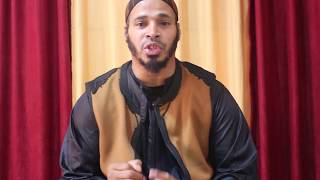
The texts above are this page's material. The scene is also argued on camera, and one recording follows, embedded whole: an episode from the EFDawah channel asking who prayed in the garden, and to whom. Timestamps jump to each argument. The challenge he formulates is the question this scene raises, and the written case on both sides is argued in full on the question page.

EFDawah on the Gethsemane prayer

A single-presenter episode on the Gethsemane prayer: who was praying, who was prayed to, and what the scene asks of the doctrine

A single-presenter episode on the Gethsemane prayer: who was praying, who was prayed to, and what the scene asks of the doctrine · EFDawah ↗

  • 4:28 ↗ He sets the scene from Matthew's own text: a prayer appealed upward, with the will of the one praying distinguished from the will of the one prayed to.

    “Jesus is praying and he's appealing to God. He said, oh my Father, if it is possible, if it is possible, let this cup pass from me, let this cup pass from me. Nevertheless, not as I will, but as you will.”
  • 5:56 ↗ He restates the scene granting the doctrine for the sake of argument, and locates the problem there: one person of the Trinity praying to another.

    “Now according to the Bible testimony, Jesus was praying to the Father. Jesus was praying to the Father. So you have one part of the Trinity praying to another part of the Trinity.”
  • 8:00 ↗ His full formulation of the challenge runs in both directions at once: who exactly received this prayer, and who exactly was making it.

    “Again, the question in full is: when Jesus was earnestly praying in the garden of Gethsemane, was Jesus and the Holy Spirit also the target of that prayer, and was the Father and the Holy Spirit also part of the humble petition?”